Difference between revisions of "Instruction:B5d9d0c7-579f-4415-ba3a-dc65836710bb"
| Line 63: | Line 63: | ||
| − | + | *The sense perception of the observer | |
| − | * The sense perception of the observer | + | *The impacts of the observer |
| − | * The impacts of the observer | + | *The viewpoint of the observer |
| − | * The viewpoint of the observer | ||
}} | }} | ||
{{Instruction Step Trainee | {{Instruction Step Trainee | ||
| Line 76: | Line 75: | ||
{{{!}} class="wikitable" | {{{!}} class="wikitable" | ||
| − | {{!}}[[File:Swirl.png{{!}}center{{!}}frameless{{!}}300x300px]] | + | {{!}}[[File:Swirl.png{{!}}center{{!}}frameless{{!}}300x300px|link=Special:FilePath/Swirl.pngcenterframeless300x300px]] |
| − | {{!}}[[File:Man leaning.png{{!}}center{{!}}frameless{{!}}300x300px]] | + | {{!}}[[File:Man leaning.png{{!}}center{{!}}frameless{{!}}300x300px|link=Special:FilePath/Man_leaning.pngcenterframeless300x300px]] |
{{!}}- | {{!}}- | ||
| − | {{!}}[[File:Bird in the hand.png{{!}}center{{!}}frameless]] | + | {{!}}[[File:Bird in the hand.png{{!}}center{{!}}frameless|link=Special:FilePath/Bird_in_the_hand.pngcenterframeless]] |
| − | {{!}}[[File:Rabbit duck.png{{!}}center{{!}}frameless]] | + | {{!}}[[File:Rabbit duck.png{{!}}center{{!}}frameless|link=Special:FilePath/Rabbit_duck.pngcenterframeless]] |
{{!}}} | {{!}}} | ||
| + | |||
| + | |||
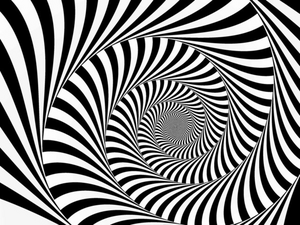
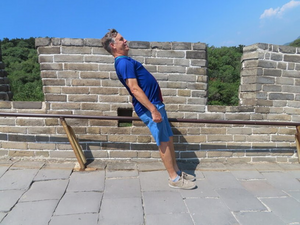
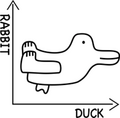
How we interpret the information from our senses to have meaning is termed ‘perception’. Two people might be exposed to the same sensory experience, but the way in which they interpret the information can differ. Perception of the same senses can vary from one person to another because each person interprets stimuli differently based on their learning, memory, emotions, and expectations. For instance, if we ask five people to describe a painting, it is likely that the five descriptions will be different, even though the people are all looking at the same painting. | How we interpret the information from our senses to have meaning is termed ‘perception’. Two people might be exposed to the same sensory experience, but the way in which they interpret the information can differ. Perception of the same senses can vary from one person to another because each person interprets stimuli differently based on their learning, memory, emotions, and expectations. For instance, if we ask five people to describe a painting, it is likely that the five descriptions will be different, even though the people are all looking at the same painting. | ||
}} | }} | ||
Revision as of 14:55, 28 April 2025

 Modules
Critical Thinking, Standpoint & Ethics
The aim
To encourage learners to reflect critically upon their own beliefs and assumptions and to recognise the importance of positionality in the construction of knowledge and approach to ethical analysis.
At the end of this module, learners will be able to:
- Reflect upon their own positionality, where it comes from, how it influences their thinking and personal biases.
- Critically examine the basis of knowledge.
- Appraise the significance of alternative epistemological positions.
- Take a critical approach to ethical analysis.

Module Introduction
Video Transcript
According to Burbules and Berk (1999): Where our beliefs remain unexamined, we are not free; we act without thinking about why we act, and thus do not exercise control over our own destinies (p46).
An understanding of where our knowledge, beliefs and assumptions come from, and how we are positioned in relation to our research is vital for an ethical approach to research and analysis. Cultivating a habit of critical reflection is an important step towards gaining this understanding.
In this module you will be asked to think about how knowledge is created, to reflect upon your own beliefs, assumptions and biases, and how these might impact upon research and ethics.
Thinking About Knowing

We begin with some questions to start you thinking about where your knowledge comes from. Do you know the answers to these questions?
(Complete the quiz before reading on)
Easy? Maybe, but how did you know the answers?
These questions represent two different kinds of knowledge: a priori and a posteriori. To answer questions A. and C., one can employ reasoning, whereas the answers to questions B. and D. stem from observation and experience.Thinking about Knowing continued

Philosopher Immanuel Kant maintained that a priori knowledge is independent of experience. He contrasted this with a posteriori knowledge, which has its sources in experience and observation. In life, most knowledge is of the a posteriori form; it is rooted in experience and observation.
Watch this video to find out why philosophers think there might be a problem with this.
The Problem Of Induction
I Saw It With My Own Two Eyes

For most people, the ultimate proof that something is true is to see it for themselves. But how reliable are your observations? In the following pages, we will consider three potential influencing factors:
- The sense perception of the observer
- The impacts of the observer
- The viewpoint of the observer
The Sense Perception Of The Observer

We receive information through one or more of the senses: sight, hearing, smell, touch, and taste, but do we perceive things as they really are? Take a close look at the images below:
 |
 |
 |
 |