Critical Thinking, Standpoint & Ethics

 Modules
Critical Thinking, Standpoint & Ethics
The aim of this module is to encourage learners to reflect critically upon their own beliefs and assumptions and to recognise the importance of positionality in the construction of knowledge and approach to ethical analysis.
At the end of this module, learners will be able to:
- Reflect upon their own positionality, where it comes from, how it influences their thinking and personal biases.
- Critically examine the basis of knowledge.
- Appraise the significance of alternative epistemological positions.
- Take a critical approach to ethical analysis.

Module Introduction
Video Transcript
According to Burbules and Berk (1999): Where our beliefs remain unexamined, we are not free; we act without thinking about why we act, and thus do not exercise control over our own destinies (p46).
An understanding of where our knowledge, beliefs and assumptions come from, and how we are positioned in relation to our research is vital for an ethical approach to research and analysis. Cultivating a habit of critical reflection is an important step towards gaining this understanding.
In this module you will be asked to think about how knowledge is created, to reflect upon your own beliefs, assumptions and biases, and how these might impact upon research and ethics.
Thinking About Knowing

We begin with some questions to start you thinking about where your knowledge comes from. Do you know the answers to these questions?
(Complete the quiz before reading on)
Easy? Maybe, but how did you know the answers?
These questions represent two different kinds of knowledge: a priori and a posteriori. To answer questions A. and C., one can employ reasoning, whereas the answers to questions B. and D. stem from observation and experience.
Thinking about Knowing continued

Philosopher Immanuel Kant maintained that a priori knowledge is independent of experience. He contrasted this with a posteriori knowledge, which has its sources in experience and observation. In life, most knowledge is of the a posteriori form; it is rooted in experience and observation.
Watch this video to find out why philosophers think there might be a problem with this.
The Problem Of Induction
irecs Critical thinking, standpoint & ethics step 3 Audio Transcript 1
I Saw It With My Own Two Eyes

For most people, the ultimate proof that something is true is to see it for themselves. But how reliable are your observations? In the following pages, we will consider three potential influencing factors:
- The sense perception of the observer
- The impacts of the observer
- The viewpoint of the observer
irecs Critical thinking, standpoint & ethics step 4 Audio Transcript 1
The Sense Perception Of The Observer

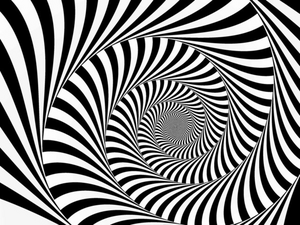
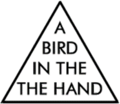
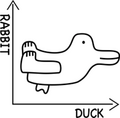
We receive information through one or more of the senses: sight, hearing, smell, touch, and taste, but do we perceive things as they really are? Take a close look at the images below:
 |
 |
 |
 |
irecs Critical thinking, standpoint & ethics step 5 Audio Transcript 1
Impacts Of The Observer

Researchers in many fields have long known that the act of looking at something can change it. This holds true for people, for animals, and for particles. Below you will see four well known examples of how an observer can have an impact on what they are observing. For this drag and drop exercise, match the impact type to the meaning.
Exercise Feedback
These phenomena are well known in research. For instance, being observed makes psychiatric patients a third less likely to require sedation (Damsa et al, 2006), or the famous double slit experiment in modern physics. But many people believe that what we see is never what ‘really is’, even in the most highly controlled experimental settings. What do you think?irecs Critical thinking, standpoint & ethics step 5 Audio Transcript 1
The Viewpoint Of The Observer

Sometimes its not just the presence but the viewpoint which changes the interaction with the observed.
The third influencing factor upon what is observed stems from the viewpoint of the observer. Researchers are not neutral processors of information. As human beings, they bring with them a host of assumptions and preconceptions.
irecs Critical thinking, standpoint & ethics step 7 Audio Transcript 1
Scientific Paradigms

Video Transcript
The concept of scientific paradigms was introduced by Thomas Kuhn in 1962 in the book: The Structure of Scientific Revolutions. By ‘scientific revolution’ Kuhn has in mind a major turning point in the development of science, such as is associated with Copernicus, Newton, or Einstein. Each of these figures initiated a spectacular change of course in the development of science, which is often characterised as a revolutionary change.According to Kuhn, a scientific revolution is not so much a leap forward as a change of direction. When a scientific revolution occurs, science does not progress more rapidly along a pre-determined path, but rather sets out along a different path altogether.
Researchers who share a paradigm will also share certain basic beliefs; they share a particular understanding of what science is all about, and how it can be pursued. In essence, they share a way of seeing the world. Once there is convergence on a paradigm, there is a framework in which problems can be solved, researchers in the field have a clear idea of where the problems lie, and of what might count as a solution to them. The researchers speak a common language.
irecs Critical thinking, standpoint & ethics step 8 Video Transcript
What Is A Paradigm?

irecs Critical thinking, standpoint & ethics step 9 Audio Transcript 1
A View From Somewhere

irecs Critical thinking, standpoint & ethics step 10 Audio Transcript 1
Which Paradigm Are You Working In?
irecs Critical thinking, standpoint & ethics step 11 audio transcript 1